A poker bot sounds simple when you first hear the phrase, but it carries a heavy meaning in the online world. People imagine a small program running quietly in the background, watching a table and making choices without a real person pressing the buttons. It feels strange because poker is a game built on people, not machines.
Yet here we are, talking about something that can study patterns, react faster than humans, and make steady choices even during long sessions. Poker bots raise excitement for some but worry for others. After all, what happens when a tool becomes so strong that real players cannot compete anymore? The truth is that bots change how we think about the game, the rules, and the fairness that keeps everything fun.
What Is a Poker Bot?
A poker bot is a piece of software that tries to play poker like a human. It looks at cards, bets, and actions at a table and responds using a programmed strategy. Many bots try to act like an advanced poker tool that a user might control from the outside. Some run inside a poker client, while others read information from the screen.
They aim to stay consistent and avoid tilt, something recreational players struggle with. Some bots try to exploit weak players, while others follow game theory ideas. A bot could even read a hand history file to analyze what happened in past rounds. But the problem appears when the bot plays against real poker players who expect a fair match. That is where the controversy usually starts.
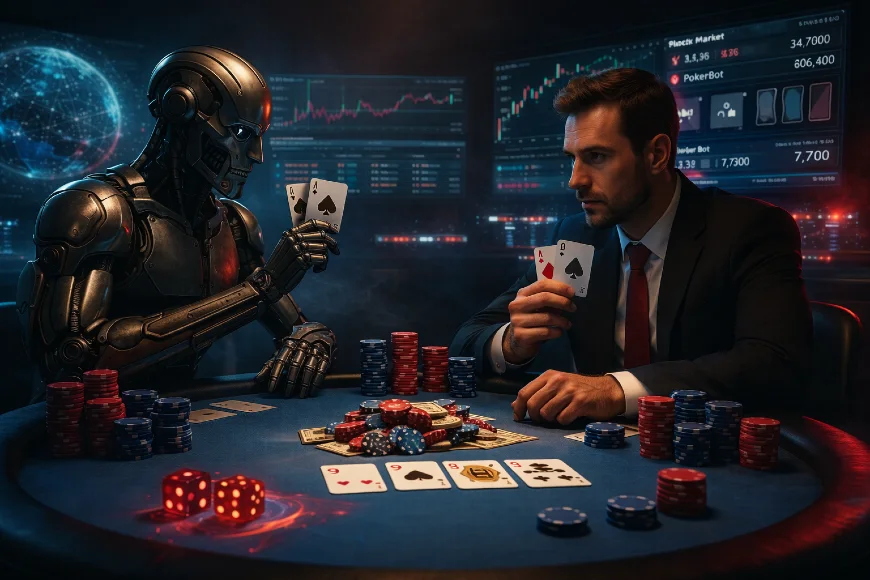
How do Poker Bots Work?
Poker bots work by mixing math, programming, and prediction. A developer writes code that tells the bot how to respond to each situation. The program studies patterns by tracking bets and actions, trying to identify its weakness or strength against an opponent. Some bots go deeper and attempt to exploit mistakes that many players make at different stages of a hand.
They look at ranges, pot sizes, and bet sizing to decide what to do next. Bots can advance decision-making far faster than a human because they do not get tired or emotional. They also use data that builds a profile for each opponent over time. Bots act inside poker rooms by interacting with the poker client automatically, though some try to hide their activity to avoid being flagged. They move quickly, follow a plan, and never drift from strategy.
Plays Poker Automatically
A bot could sit at a table and play without a human touching the controls. It reads the cards on the screen, chooses a bet, and sends the action automatically. Some systems run as pokerbot tools that grind cash games or tournament spots for hours. They keep track of rake, stack sizes, and pot odds with no break. The bot may even update itself using new data from previous hands. This way, it becomes more capable as time passes. Bots also do not panic when facing strong aggression from a reg. They just follow the math and stick to the programmed plan.
Making Decisions Based on Predefined Algorithms
Bots use algorithms to guide every step. These algorithms come from game theory, strategy charts, or models built from past hands. They consider factors like position, blinds, stack depth, and opponent hints. The bot studies actions and tries to identify what hand an opponent might hold. It compares that information to a theory model and then makes a choice.
This approach allows bots to remain steady even during tough moments. They rely on math, probability, and long-term winning ideas. Some bots even copy styles seen in advanced poker study tools. Over time, a bot could advance decision-making, but it still follows the same internal rules written by its developer.
Integration with Poker Platforms
Integration happens when a bot communicates with a poker client. It might read screen pixels, take information from memory, or use an unofficial method to track what is happening. Some programs connect through external software that watches the table and feeds the bot information about bets, cards, and stack sizes. This is where things get suspicious because most poker rooms do not allow any form of automated play.
Bots may also require special settings or a license to run. They can break rules by pretending to be a human user. Because of this, sites constantly look for activity that seems too quick or too perfect. The fight between detection and evasion feels like a never-ending competition. Some discussions even mention how bots behave differently on platforms like Pokerstars, which makes detection even more important.
Performance Optimization
Performance optimization helps a bot run faster and make sharper choices. Some developers focus on making the bot react instantly, especially in Texas Hold’em spots where timing matters. Others try to tune the bot for heads-up battles or long tournaments. The process includes cleaning the code, reducing errors, and adjusting bet sizing rules to stay balanced.
Bots can also use large databases that allow them to analyze ranges before making a move. Many developers push updates, so the bot becomes more consistent. But even if the bot performs well, the ethical problem stays the same. A strong bot still challenges the foundation of fair play.
Poker Bots: Weighing the Pros and Cons
People often argue about whether bots are helpful tools or harmful ones. Some players say bots help them study theory and improve their game. Others see them as tools built to cheat, causing frustration and fear in online poker rooms. Bots change how competition feels because they remove emotion from the table. The debate continues, and each side believes they are defending what makes poker meaningful.
Pros
- Consistent Play: A bot plays the same way every time. It does not tilt, get tired, or make emotional mistakes. This consistency keeps its decisions steady through long sessions. Humans struggle with that, especially when facing swings or pressure. Bots use math instead of guessing, which protects them from errors caused by stress. Because of this, some people test bots privately to learn what consistent thinking looks like. Still, using them in real games remains a problem.
- Mathematical Precision: Bots rely on math instead of emotion. They follow patterns built from game theory, which helps them avoid risky choices. They study pot odds, ranges, and expected value with perfect focus. A human might guess or make a small mistake, but a bot does not drift from its formula. This precision makes it strong in Texas spots where numbers matter. Some users find this helpful when reviewing hands.
- Elimination of Emotion: Emotion often pushes players into mistakes. A bot does not get angry, lose focus, or chase a pot. It simply follows instructions and avoids tilt. That gives it an edge against recreational players who drift during losses. Bots do not fear aggression or pressure. They stay calm because feelings never affect them.
Cons
- Cheating and Unfair Advantage: Using a bot in real games is considered cheating. It removes the human challenge and gives one side a huge advantage. Poker is supposed to be played by people, and machines break that idea. Bots turn the game into something mechanical instead of creative. Many poker rooms ban accounts connected to automated tools. In some cases, people even try to sell these tools on shady sale sites, which creates even more problems.
- Erosion of the Game’s Integrity: Bots make players question whether online games are fair. When someone suspects a bot, trust in the platform drops. That hurts the whole community. Poker depends on honesty and shared rules. If bots spread, the game loses the special moments that come from reading a person, not a machine.
- Discouragement of New Poker Players: New players often feel nervous when they imagine facing bots. They worry that they cannot compete with machines that constantly study math and theory. This fear discourages beginners from joining online games. It limits the growth of the community and creates a more closed environment where only advanced players remain. Some bots even target weaker fish, which makes the ethical problem even worse.
- Ethical Concerns: Ethical concerns appear whenever someone uses tech to gain an unfair edge. Bots raise questions about honesty, fairness, and loyalty to the game. Many players feel that using bots betrays the spirit of Texas Hold’em, where decisions reflect human creativity. Even if the software is powerful, that does not make it right to use.
Why Poker Bots Are Controversial?
Poker bots create tension because they blur the line between skill and automation. People join games expecting a fun challenge, not a machine that calculates every move. Bots use advanced models that many humans cannot match, and that brings fear of being overrun. Some people argue that bots help with training, while others say they destroy the game.
The controversy grows because bots can hide and behave like regular users. And once trust breaks, it becomes hard to rebuild. The debate continues across forums, poker rooms, and even places like GitHub, where people discuss programming ideas. Some even compare the situation to rta, which adds more worry. Strange how a simple piece of software can shake an entire community.
Difficulty Detecting Advanced Bots
Detecting bots becomes harder as they grow smarter. Some systems disguise patterns, change timing, and move like real humans. Sites look for suspicious movement, but bots adjust quickly. They analyze ranges and bet like a skilled reg, hiding behind natural rhythms. This makes it tough for poker sites to catch them.
Since bots can update themselves automatically, detection becomes a constant chase. Even with support teams working nonstop, the process never feels finished. Some teams even explore unusual patterns related to trading behavior to catch hidden signals.
Impact on Trust in the Poker Community
Trust holds the poker world together. When players believe opponents follow the rules, games stay fun and fair. Bots break that trust and create fear that the game is rigged. Some recreational players leave because they no longer feel safe.
Others question every hand, every strategy, and every strange decision from an opponent. This doubt affects tournaments, cash games, and training sites. The entire community suffers when people worry that software, instead of humans, may be making the choices.

Top 5 Poker Bots Worth Trying
When talking about software used for study, not for live cheating, some tools stand out. They help players learn theory, review hands, and understand math more deeply. These programs do not join real games but instead help users study offline. They teach poker theory through simulations, making the learning process easier. Many people in Texas Hold’em use them to study advanced poker ideas.
1. PioSolver
PioSolver helps players explore game theory. It runs simulations, builds ranges, and shows how hands perform in different spots. Users test ideas, change bet sizes, and see how opponents might respond. Many people use it to advance their thinking before joining real games. It is a strong study tool when used responsibly.
2. GTO Wizard
GTO Wizard teaches players how to make balanced choices. It shows charts, ranges, and solver answers in a simple layout. Many students enjoy its step-by-step lessons. It also helps identify mistakes and suggests better lines. Players like its structure because it turns theory into something visual.
3. Simple Postflop
Simple Postflop studies actions after the flop. It allows players to look at different lines and test how hands respond. The software builds ranges for betting, calling, and folding. Many use it to understand how competition changes across textures. Its clean interface makes learning less overwhelming.
4. MonkerSolver
MonkerSolver works with both Texas Hold’em and other formats. It helps players see large range structures with strong detail. Users test full trees and run deep simulations. It is especially popular in advanced circles where math matters. Though powerful, it still requires careful study.
5. PokerSnowie
PokerSnowie uses an AI approach to modeling poker decisions. It gives feedback after each hand and explains mistakes clearly. Players enjoy its training mode because it feels like facing a real opponent. The system helps fix leaks and show stronger strategy paths.
How Online Poker Sites Detect and Prevent Bots?
Poker sites use many tools to detect bots. They track timing, motion, and patterns in how players act. If someone plays too consistently or reacts too perfectly, the site may investigate. They also look for identical actions across different accounts and review chat behavior to see if something seems unusual.
Technical teams scan for software running beside a poker client. Some sites analyze hands using math models to catch strange patterns. When they find evidence of automated play, they ban the account. These steps protect the community and keep poker games fair for everyone.
FAQs
Are poker bots legal?
Poker bots are not legal in real online poker games. Most poker rooms ban them because they break rules and give unfair advantages. Using one can lead to losing your account, your funds, and your reputation. Some countries even treat cheating with software as a serious offense. Bots harm the spirit of poker, which depends on human decisions. So while you can study with offline software, using a bot in real games is not allowed. The rule is simple: if a program makes choices automatically during live play, it crosses the line.
Do any sites allow poker bots for training purposes?
Some training sites allow people to use AI tools to study hands privately. These sites are built for learning, not real money competition. They help players explore math, theory, and patterns through simulation. They do not run games with real stakes, and they do not allow bots to face human opponents. Instead, they give players a safe space to learn strategy. Real poker rooms keep strict rules against bots, but educational platforms use AI as a teaching tool.
Can bots be used in live poker games?
Bots cannot be used in live poker games. The physical setting makes it impossible for software to act on your behalf without breaking rules. Live poker depends on real human choices, reading faces, and reacting to players at the table. Any attempt to use a program in a live event would be seen as cheating. Casinos watch carefully for electronics or suspicious devices. In-person poker must stay human for the game to work the way it was meant to.